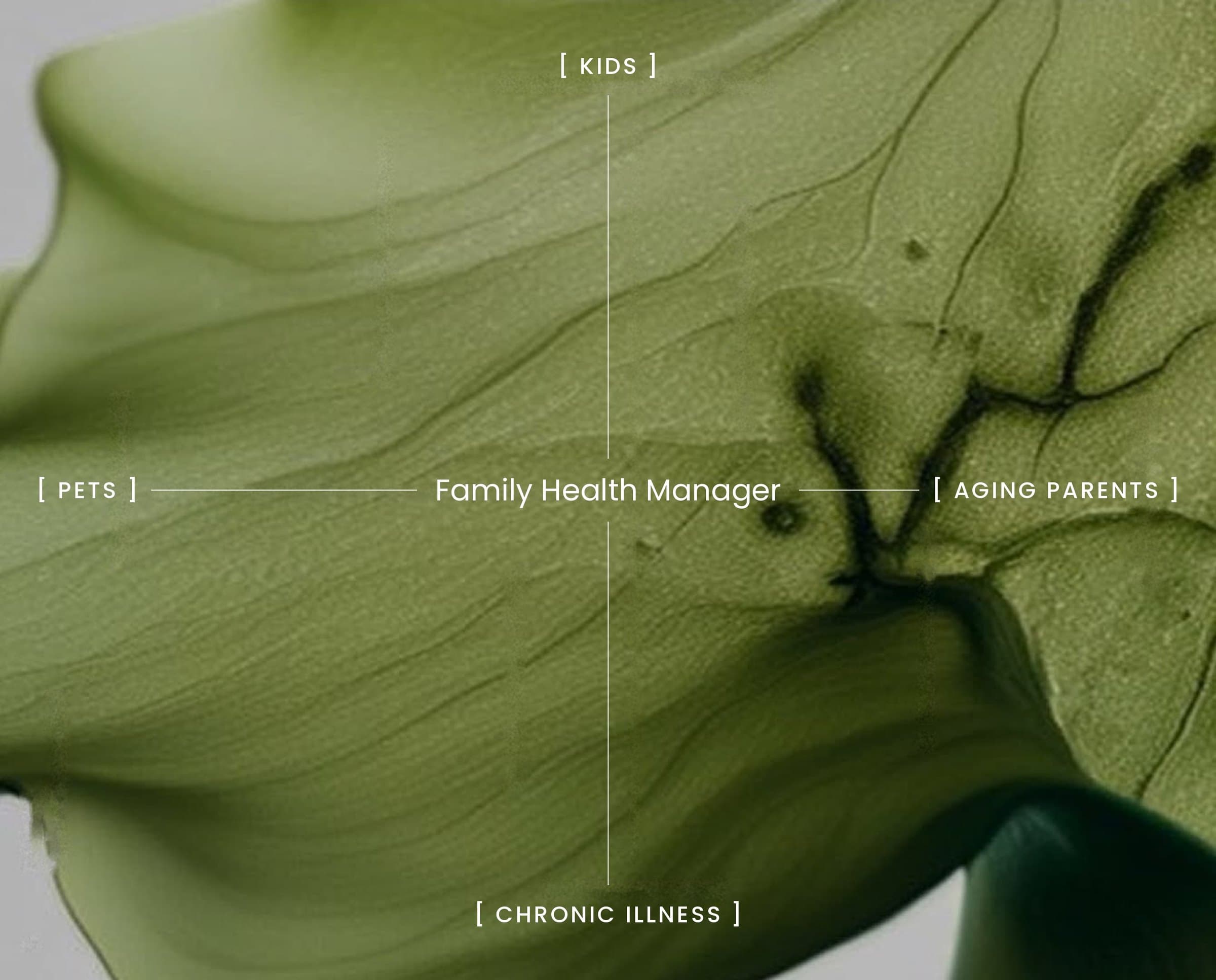
Jini users are not defined by one demographic. They are defined by the role they choose to play in their families.
They want to take charge of their family's health. They strive to be proactive, diligent, and assertive when it comes to caring for the people they love. They don't want to leave their family's health to chance.
We call the person doing this work the family health manager.
Jini is built to "raise the ceiling" of what they can do, helping them catch more, remember more, connect more information, and make better decisions without carrying it all in their head.
1. The person managing a large family
In a large family, one person often becomes responsible for keeping track of everyone's doctors, medications, test results, appointments, and follow-ups. With so many people and records to manage, information quickly becomes scattered.
Jini gives each person their own record while keeping the family connected in one place. This makes it easier to find information quickly, manage different care plans, and notice when the same health issue appears across relatives.
2. The person caring for parents or grandparents
Caring for an older family member often means piecing together years of history across several doctors, medications, and conditions. They may not remember every dosage, reaction, or recommendation, leaving the caregiver to fill in the gaps.
Jini creates one continuous record of their care, helping caregivers understand the full history and check whether new advice accounts for existing conditions and medications.
It also gives them the context to ask informed questions and advocate for someone who may not be able to do so alone.
3. New parents and parents of young children
Infants and young children build a medical history quickly. Within the first year alone, parents may be managing vaccinations, illnesses, medications, reactions, feeding changes, sleep concerns, and developmental milestones.
With more than one young child, those details can easily blur together.
Jini keeps each child's history separate and organized. Parents can review what happened, when it happened, and what the doctor recommended without trying to reconstruct the timeline from memory.
4. The person caring for someone with a chronic illness
Chronic illness involves years of symptoms, tests, side effects, specialists, and treatment changes. The caregiver is often the only person who sees how all those parts fit together.
Jini helps them understand how the person responded to different treatments, which symptoms remain unresolved, and what has changed between appointments.
It also gives them a clear way to update the care team, even when months of information and several specialists are involved.
At the end of the day, Jini is for people who do not want to be passive participants in their or their family's healthcare.
That does not mean distrusting doctors or trying to replace medical expertise.
A doctor may see one appointment, one result, or one part of the problem. You and your family have lived through the entire history.
Jini helps you bring that context into the conversation.